The History of Prestonfield Primary School
The community of Prestonfield was designed and built as a Garden Village during the early 1930’s. The School, which was opened in 1931, was an architectural period piece of considerable character possessing several interesting and unusual features.
It was built at a time when penicillin had not yet arrived and the effects of major infectious diseases were sometimes quite devastating. The architect Bernard Widdows was commissioned to design an open-air school for the new housing area at Prestonfield. The result was a single storey building planned around a square courtyard laid out with roses and grass. There were wide verandahs leading to the centre garden. Each classroom had two glass sides that could fold up to let in the fresh air and also skylight windows allowing plenty of air to circulate to help protect against the spread of infection. Six miles of piping provided under-floor heating so the children had ‘warm feet – cool heads’. Over the years, adaptations to the original design allowed for a slightly warmer temperature for children and teachers!

Royal Visit
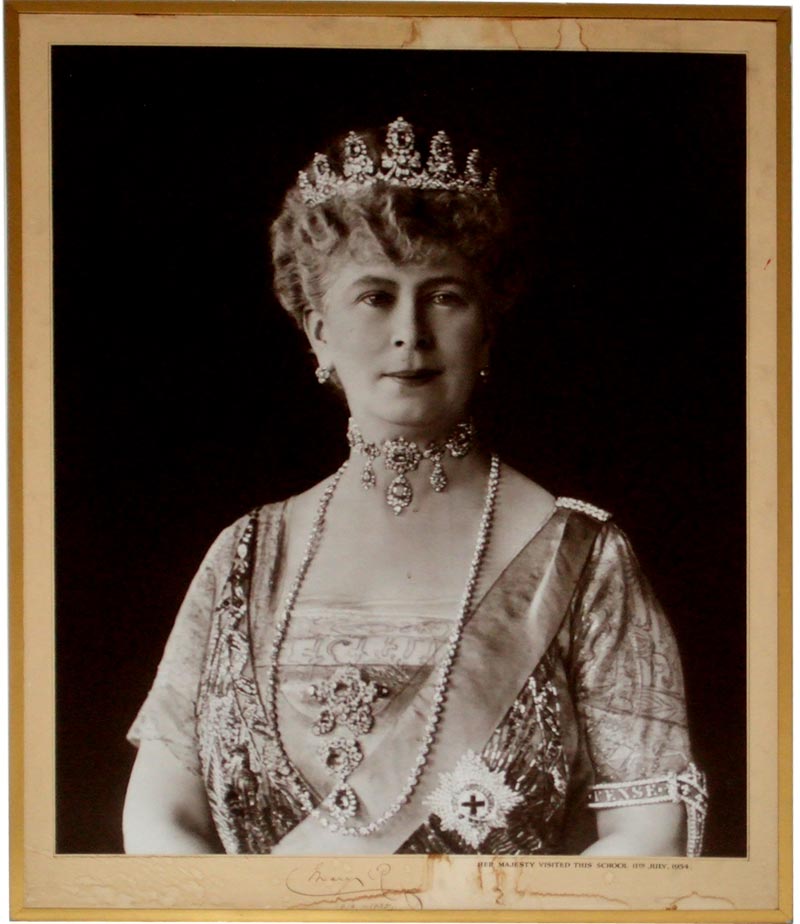
King George V and Queen Mary visited the school on their visit to Edinburgh in 1934.
An entry in the school log on 11 July 1934 read:
‘Their Majesties the King and Queen paid a surprise visit to the School this forenoon. They visited all the classes and spoke to several of the teachers and pupils. On departing, the King expressed his delight with everything he had seen.’
Art in the Schoolyard
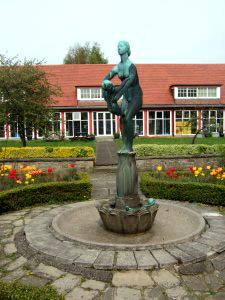
In the 1930’s Edinburgh pioneered a programme of introducing art into schools and school playgrounds. As part of this programme a sculpture was commissioned for Prestonfield School and set in the centre of the open-air square, round which the classrooms of the school are arranged. The sculptor was Thomas Whalen. An article written in The Scotsman newspaper on June 18 1935 on the subject of ‘Art in the Schoolyard’, described this sculpture in some detail.
“The sculpture makes an admirable open-air decoration for an attractively designed school. The group consists of a mother holding a child in the attitude of placing it in a bath, the infant being held at arms’ length. The pedestal on which the sculpture is placed rises from a circular pool of water. The sculpture has a realistic appearance when the water of the fountain sprays upon the figures. It would be interesting to know, if that were possible, how much this fine piece of sculpture will count in the real and lasting education of the children who look at it, as they often will do, from the schoolyard, and what influences it will have on their future.” This feature of the garden is well preserved and remains as beautiful today as it was in the 1930’s.
Prestonfield School becomes a Listed Building
In 1996 the Secretary of State for Scotland included Prestonfield School as one of Scotland’s Listed Buildings because of its special architectural and historic interest.
There was a spacious area around the school designed for informal play. Mature trees, which predated the building, enhanced this play area and there were extensive lawns and gardens. The external environment has changed radically over the years. The trees were felled, some because of age while others succumbed to Dutch elm disease and the areas of green were gradually erased by tarmacadam.
We are Kind We are Responsible We are Ambitious